
Last updated October 16, 2026
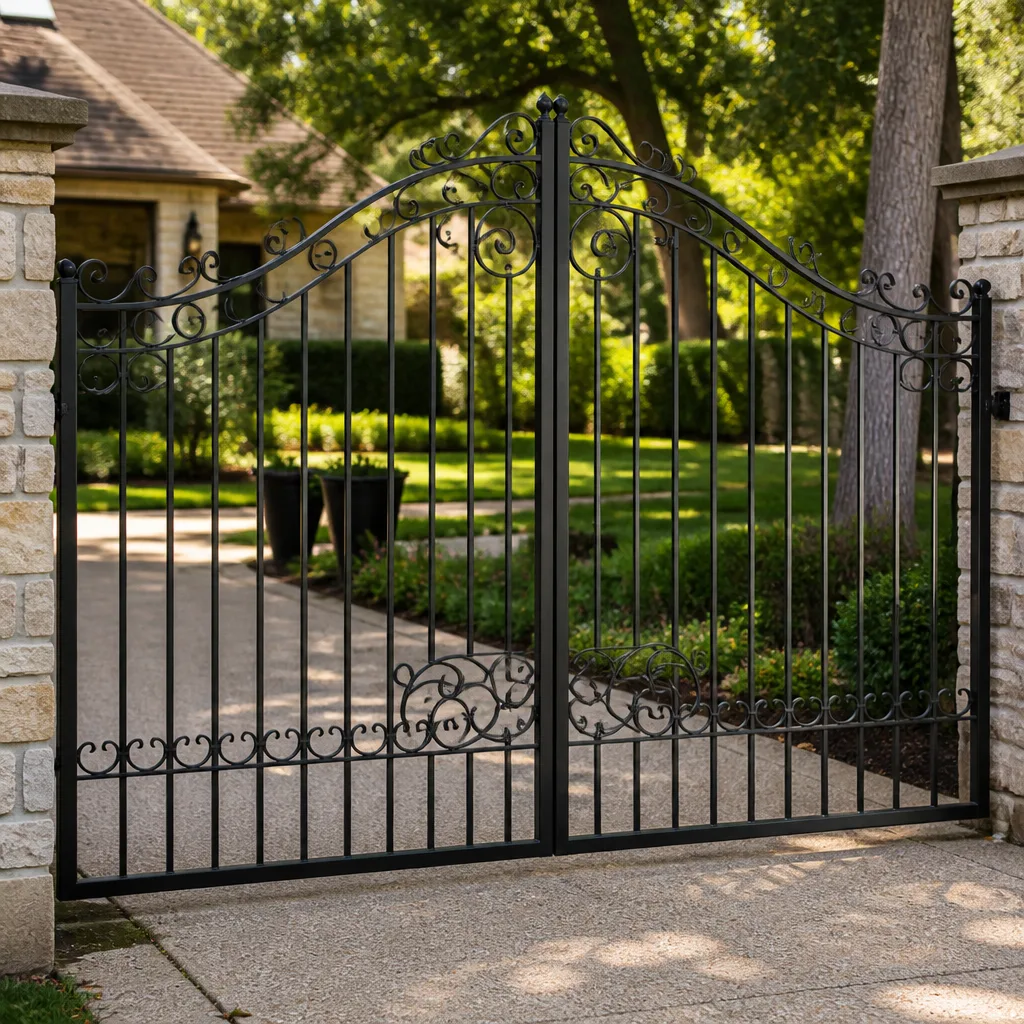 Wrought iron
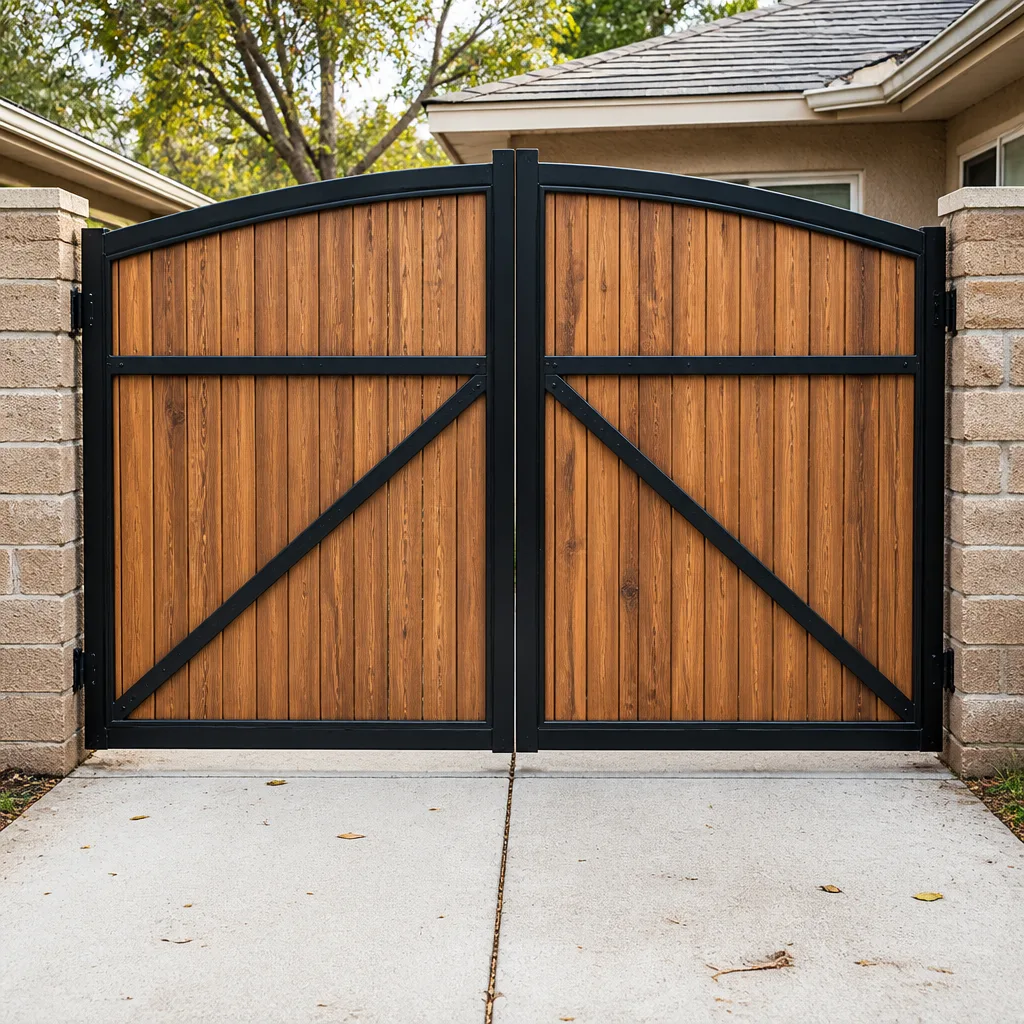 Wood & steel frame
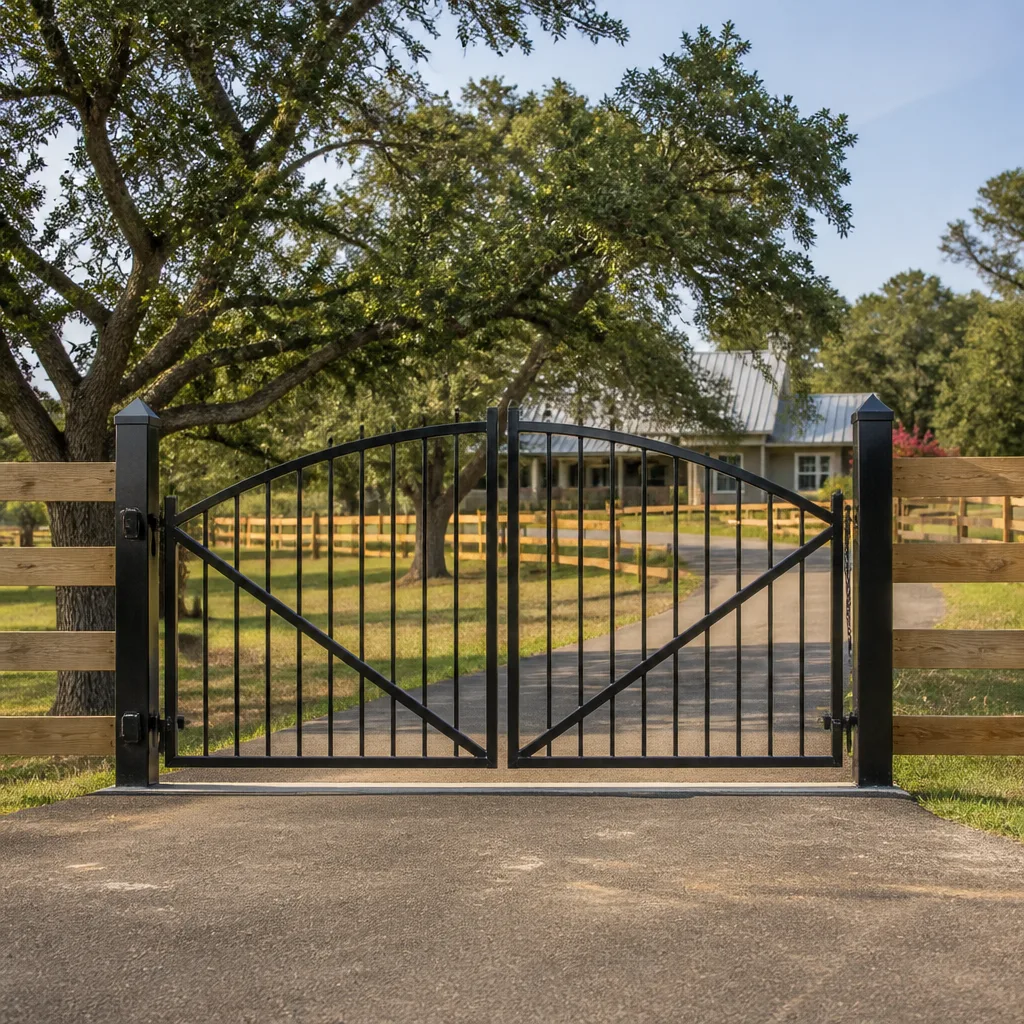 Farm & ranch
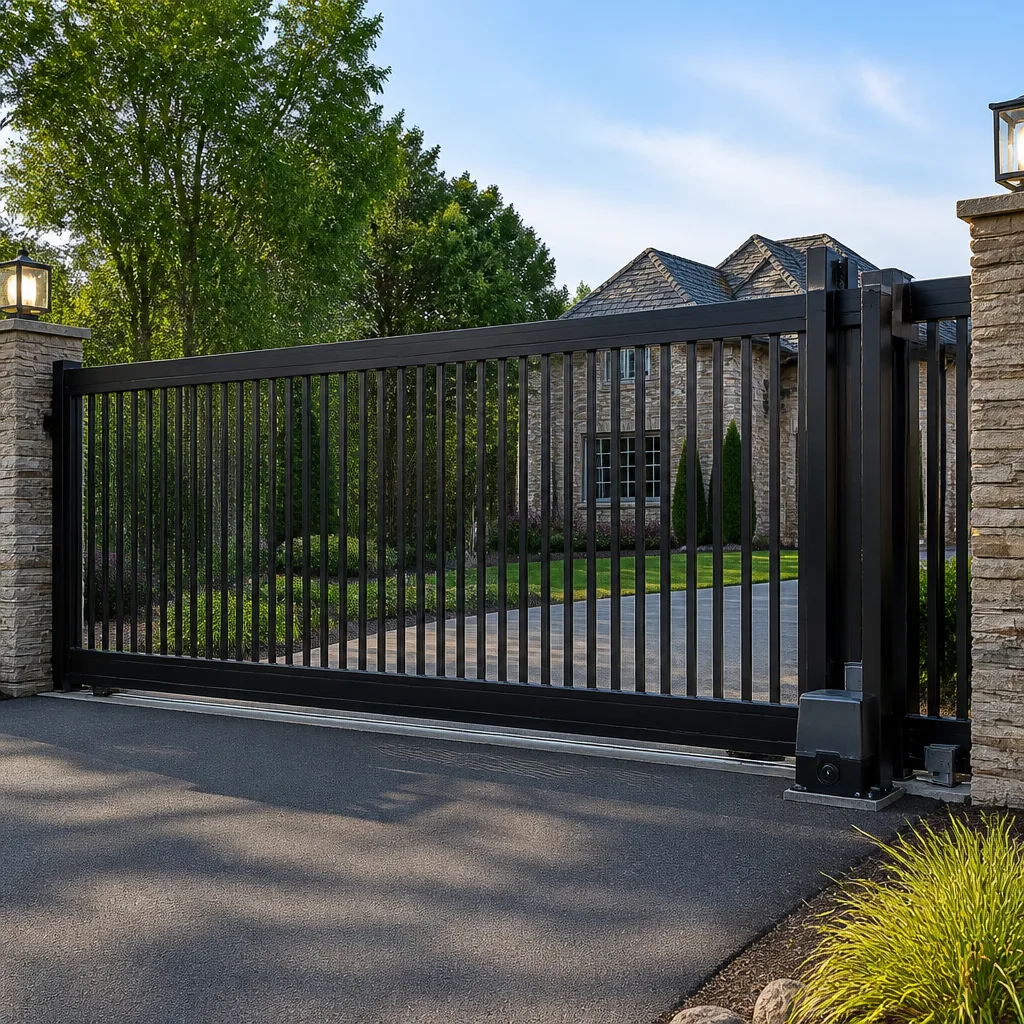 Sliding driveway gates
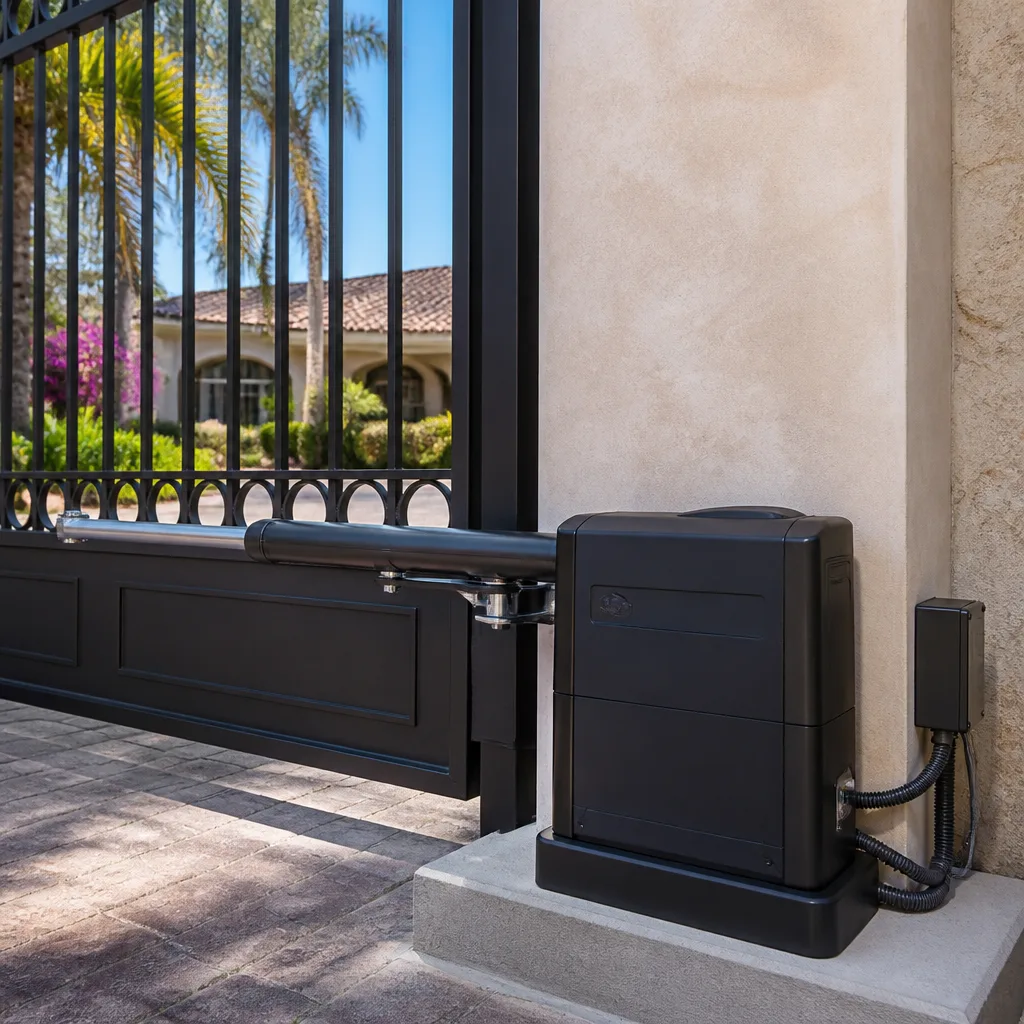 LiftMaster operators
Free on-site gate assessment - hinges, posts, and your LiftMaster or Nice gate operator checked before anything is quoted
The assessment is free and the quote is the invoice.
Get your free estimateGate Repair Warning Signs: A Orlando Homeowner’s Reference Guide
A gate that hesitates for two seconds before moving is not “warming up.” It’s a motor working at overcapacity, and in Orlando’s heat and humidity, that two-second hesitation typically becomes a full failure within 60 to 90 days. Most gate breakdowns in Orlando don’t happen without warning. They announce themselves weeks or months in advance through a sequence of smaller signals that get dismissed as quirks, personality, or “it’s always done that.” This guide names each warning sign by what it looks and sounds like, not by the technical failure it represents, so you can identify problems in plain language before your gate stops entirely at the worst possible moment.
Quick Answer
The most common gate repair warning signs in Orlando are grinding or squealing noises during operation, hesitation when starting or stopping, unexpected reversing, visible sagging at the free end, rust bubbling beneath the paint, and remote or keypad failures that come and go. A noise you can hear from inside the house is almost always mechanical wear that needs service within the month. A gate that reverses on its own or fails to stop when it hits an obstacle is a safety issue that needs same-week attention.
Styles & brands we work with
Table of Contents
- The Symptom Index: What Your Gate Is Telling You
- Nuisance Symptoms vs. Safety Symptoms: What Needs Service When
- How to Check Gate Alignment by Eye in Two Minutes
- Remote and Keypad Failures: The Decision Tree Before You Call
- The Rust Migration Test: Finding Hidden Corrosion on Orlando Steel Gates
- Why Orlando’s Climate Accelerates Gate Wear
- What Gate Repairs Cost in Orlando: Honest Price Ranges
The Symptom Index: What Your Gate Is Telling You
Every gate failure leaves a trail. The trick is recognizing the sound or behavior pattern before it becomes a driveway obstruction. Here’s a symptom-by-symptom breakdown of what we encounter most on service calls across Orlando, from Dr. Phillips to Winter Park to Lake Nona.
Grinding. A grinding sound during gate travel is metal wearing against metal, full stop. On a slide gate, it usually points to failing rollers or a chain that’s lost tension and is dragging across the track. On a swing gate, grinding from the hinge side means the hinge bearings have worn through their grease and are now running dry. Left alone, dry bearings become scored bearings, scored bearings become seized bearings, and a seized hinge transfers all that stress into the gate frame itself. We’ve pulled swing gates in Orlando where a $90 hinge replacement six months earlier would have saved a $1,200 frame repair.
Squealing. Squealing is the higher-pitched cousin of grinding and typically points to the operator itself. On chain-driven operators, the chain is dry or overly tight. On belt-driven units, the belt has lost tension and is slipping on the drive pulley. In either case, the sound means friction where friction shouldn’t be. Friction generates heat. Heat kills motors. In an Orlando August, an operator running hot from belt slip is already near its thermal limit before the sun adds another 20 degrees to the housing.
Hesitating. A gate that pauses before it moves or stutters mid-travel is telling you the motor is working harder than it should. The two most common causes we find on Orlando properties are a failing start capacitor on the motor and a gate that’s drifted out of alignment and is binding against its own hardware. The capacitor is a cheap fix, around $60 to $120 parts and labor on most residential operators. The binding is more involved because it means something changed in the gate’s geometry, and that something rarely changes back on its own.
Reversing unexpectedly. A gate that opens normally, then reverses direction halfway through its cycle, is almost always reacting to a safety sensor input. On gates with a physical safety edge, the edge is making contact with something, often a misaligned post or debris in the gate’s path. On gates with photo eyes or loop detectors, the sensor is detecting a false obstruction. This matters because a gate that reverses unpredictably is a safety hazard, and it’s also a sign the gate’s safety systems are actively compensating for something. The gate is not just misbehaving. It’s fighting something.
Sagging. A swing gate that droops at the free end, far from the hinges, is the clearest visual warning that the gate’s structure is losing its battle with gravity. On steel gates, sagging means a hinge weld is failing or the post itself has shifted in the ground. On aluminum gates, which are lighter but more flexible, sagging often means the frame has begun to twist. Either way, a sagging gate puts exponentially more strain on the operator, because the motor now has to lift the gate’s weight as well as swing it. That’s when operators start failing, repeatedly, and owners start replacing them only to watch the new one fail too.
Nuisance Symptoms vs. Safety Symptoms: What Needs Service When
Not every warning sign demands immediate action. But some do, and knowing the difference is the difference between a repair bill and a liability. Here’s how we categorize symptoms on the service side.
Nuisance symptoms: annoying but stable
- A faint squeak when the gate first starts moving in the morning, before the heat of the day. This is often just morning condensation on steel hardware. If it disappears within the first cycle, monitor it.
- A slightly slower travel speed than when the gate was installed. Operators do slow with age, and a small speed loss over years is normal wear, not a warning sign. Sudden slowing, on the other hand, is a warning sign.
- A remote button that takes two presses on one specific remote, while the other remotes work fine. That’s an aging remote, not an aging gate. Replace the remote.
- Cosmetic surface rust on decorative elements that don’t bear weight, like post caps or scrollwork. Clean it and seal it when you get around to it.
Safety symptoms: needs same-week service
- The gate reverses direction on its own during a normal open or close cycle. This indicates the safety reverse system is engaged, which means the gate is either hitting something or thinks it is. Both versions are a safety problem.
- The gate does not stop or reverse when it encounters an obstruction. If the gate keeps pushing against resistance, the force limiter has been disabled, bypassed, or failed. This is the single most dangerous condition a gate can be in. Call a professional immediately and keep children and pets away from the gate until it’s fixed.
- A grinding sound that’s getting louder week over week. Progressive noise means progressive mechanical damage. The longer it runs, the more it costs to fix.
- The gate jerks or lurches instead of moving smoothly. This often means a chain or belt is about to let go, a gear has stripped teeth, or a hinge has partially seized. When it lets go, the gate won’t just stop. It may swing free or slam under its own weight.
- Visible frame cracking at any weld point on a steel gate. A cracked weld is a structural failure in progress. In Orlando’s humid air, water gets into the crack and accelerates it through corrosion, even during the dry months.
The rule of thumb we give Orlando homeowners is simple: if the problem is a sound, you have some time. If the problem is a behavior, especially unexpected movement or a failure to stop, schedule service the week you notice it. The price difference between early and late is often a multiple of three or four, and that’s before you consider the risk of a gate causing property damage or injury. See our guide on How to Hire a Gate Repair Contractor in Orlando: A Step-by-Step Guide to prepare for your service call.
How to Check Gate Alignment by Eye in Two Minutes
Alignment problems are behind more Orlando gate repairs than most homeowners realize, because a gate that drifts out of alignment starts a cascade: binding at the latch, strain at the hinges, overload at the motor. The good news is you don’t need a gate technician’s experience to spot misalignment. You need two minutes, a smartphone, and a clear view of the latch point.
The two-minute visual check
- Close the gate completely. Stand at the latch side, the side farthest from the hinges on a swing gate or the receiver post on a slide gate.
- Look at the gap between the latch and the receiver. On a properly aligned gate, the latch tongue should enter the receiver cleanly, with roughly equal clearance on all sides. If the latch is hitting the top or bottom edge of the receiver, the gate has sagged or the post has shifted.
- Open your phone’s level app. Hold the phone against the top rail of the gate, near the hinges first, then near the free end. On a properly aligned swing gate, both readings should be within about one degree of each other. More than two degrees of difference across the span means the gate frame has twisted or a hinge has dropped.
- Check the gap at the bottom. Most residential swing gates in Orlando are installed with between two and four inches of ground clearance at the free end. If that gap shrinks to less than an inch on the free end while the hinge side still has clearance, the hinges are carrying more than they should be.
If any of these checks show more than a small deviation, the gate needs mechanical adjustment before the motor pays the price. At Portcullis Gate Repair, alignment corrections are one of the most common calls we run in Orlando, and they’re typically a same-visit fix when caught before the hinge or post has sustained structural damage. For more on the full scope of what our repair service covers in the area, see our Gate Repair in Orlando page.
Remote and Keypad Failures: The Decision Tree Before You Call
When a remote stops working, most Orlando homeowners assume the wiring or the motor has failed. In our experience, the problem is usually simpler and cheaper than that. This decision tree walks through the likely culprits in the order they should be checked, from least to most expensive.
- Test all remotes, not just one. If every remote fails, the problem is downstream of the remotes themselves. Move to step 2. If only one remote fails, replace its battery first. Nine times out of ten, a single dead remote is a dead battery, and a replacement costs a few dollars at any Orlando hardware store.
- Test the keypad. If the keypad also fails to open the gate, the problem is shared between the keypad and remotes, which points to the receiver on the gate operator or a power supply issue. If the keypad works but the remotes don’t, the receiver is still functioning and the issue is the remote frequency or programming.
- Check for power at the operator. If the operator has no indicator light at all, check the breaker and any GFCI outlet in the circuit. Orlando’s afternoon thunderstorms trip GFCI outlets regularly. Reset it and retest before calling for service.
- Look for a manual release lever or key. If the operator has power and the remotes and keypad all fail, use the manual release to open the gate by hand. If the gate opens freely by hand, the operator is locked out and probably needs reprogramming or has a failed receiver board. If the gate is hard to move manually, you have a mechanical issue contributing to both the electrical failure and the manual resistance.
On systems with a Ghost Controls or Linear operator, there’s often an obvious LED diagnostic light pattern on the control board that narrows the problem to a specific component. We service those brands and more, and a quick phone call can frequently save an Orlando homeowner a service visit entirely. But if the gate is stuck closed and you need a vehicle out, that’s a call and a dispatch, not a DIY moment. Free estimates are a phone call away at (850) 816-3017.
The Rust Migration Test: Finding Hidden Corrosion on Orlando Steel Gates
Orlando’s humidity means steel gates rust faster than the national average, and the rust you can see is only half the story. Surface rust on the outside of a steel gate member often means moisture has already migrated into the inside of the tube, where the paint never reached and where rust spreads unseen until the tube fails from within. This is a classic Orlando pattern: a gate looks weathered but sound from the driveway, then one day a horizontal rail buckles and the whole leaf drops.
The rust migration test takes five minutes and uses nothing but a screwdriver handle and your knuckles.
- Walk the entire gate, both sides. Look for small paint bubbles, not obvious rust patches. A paint bubble is what rust looks like from underneath. The bubble means the corrosion is already working its way out from inside the steel.
- Tap every horizontal rail and vertical picket with the screwdriver handle. Listen for a dead, flat thud instead of a clean ring. Solid steel pings. Steel with internal rust sounds muffled, because the rust has eaten away the material’s resonance. A thud is rust you can’t see yet.
- Run your knuckles along the underside of each horizontal rail. The underside of a steel gate is where Orlando’s morning dew collects and where water sits after rain. Feel for flaking or pitting that isn’t visible from standing height. Pitting on the underside is rust migration from the inside out, and it’s further along than it looks.
- Check every weld joint, especially at the hinge plates and latch side. Rust bleeds out of weld joints first because welds are where the factory paint or powder coat is thinnest. If you see rust staining running down from any weld, the joint is actively corroding and losing structural strength.
If the test turns up bubbles, thuds, or pitting, the gate needs rust treatment and likely some structural patching or replacement before the corrosion compromises the frame. In Orlando’s climate, a steel gate with active rust migration has a window of twelve to eighteen months before the damage becomes a structural failure, and that window shrinks if the gate is near the coast or under heavy tree canopy. We address rust as part of the repair scope when we’re out on call, and we’ll tell you honestly whether a gate is worth saving or past its service life. For new steel work done right the first time, see our Gate Installation in Orlando page.
Why Orlando’s Climate Accelerates Gate Wear
Every warning sign in this guide happens faster in Orlando than it would in a drier climate, and that’s not a sales pitch, it’s physics. The same gate that lasts twenty years in Phoenix has a shorter service life in Central Florida because of three specific environmental factors.
Humidity. Orlando’s average annual humidity runs around 74 percent, and that’s an annual average, not the morning spike. Steel begins to corrode meaningfully when relative humidity stays above 60 percent for extended periods, and Orlando spends nine months of the year above that line. Every unpainted surface inside a gate tube, every raw edge at a cut point, every scratch in the finish is a place where humidity is working against the gate every day. This is why rust appears on Orlando gates that are only a few years old and why the rust migration test matters so much here.
Afternoon thunderstorms. The Orlando afternoon thunderstorm pattern isn’t just an inconvenience. It’s a daily wet-dry cycle on the gate’s exterior surfaces, and wet-dry cycling pulls moisture deeper into paint cracks and bolt holes through capillary action. A gate that gets rained on every afternoon and bakes in 90-degree sun every morning is cycling through thermal expansion and contraction daily, which is exactly how small paint failures become moisture entry points.
Airborne salt near the coast. A mile from the Atlantic in Brevard or Volusia County, airborne salt accelerates corrosion dramatically. But even in metro Orlando, irrigation water from reclaimed sources contains dissolved minerals and salts that get onto gates through sprinkler overspray. We’ve seen rust patterns on Orlando gates that trace exactly to the sprinkler head arc. Sprinkler overspray is a gate killer that no one thinks about until the rust migration test finds it.
The practical takeaway for Orlando homeowners is that gate maintenance isn’t annual maintenance here, it’s semi-annual at minimum. A visual check each spring and each fall catches most warning signs from this guide before they become failures. Whether you need a Electric Gate Repair in Orlando or a full diagnostic, catching it early saves real money.
What Gate Repairs Cost in Orlando: Honest Price Ranges
Most gate repair pricing in the Orlando market falls into predictable ranges, and we believe in telling people the number before they decide whether to call. These are the ranges we see across our service area for common residential repairs, parts and labor together.
- Photo eye or safety sensor replacement: $110 – $190
- Remote or keypad replacement and programming: $60 – $150
- Hinge replacement on a standard residential swing gate: $240 – $650, depending on gate weight and hinge type
- Chain or belt replacement on a slide gate operator: $180 – $380
- Capacitor or minor control board repair: $90 – $220
- Full operator replacement (motor and board): $850 – $1,900, depending on brand and gate size
- Swing gate actuator swap: $550 – $1,200
- Rust treatment and structural patching on a steel gate: $400 – $900 for a typical residential leaf
These numbers assume a standard residential gate and a typical Orlando property. Commercial gates run higher because they’re larger, heavier, and use commercial-grade operators with more expensive components. Every number is a range because every gate is different, and that’s why we quote in writing before any work begins. You’ll know the price before a single bolt is turned, and the Kingswell Guarantee puts it on paper: a real arrival window, a clean job site, and a written 365-day guarantee on the repair. If the repair fails inside that year, we come back and make it right at no charge under the 365-Day Done Right Promise.
Common Mistakes to Avoid
- Lubricating the gate track with WD-40. WD-40 is a solvent, not a lubricant. It washes away what little grease remains and leaves the metal unprotected. Use a silicone or lithium-based lubricant formulated for gate hardware, and on Orlando gates, do it after the afternoon rain, not before it.
- Continuing to run a gate that’s making noise. The noise is not the problem. The noise is the alarm. Running a grinding gate every day turns a $200 hinge job into a $1,200 frame repair inside a few months.
- Disabling the safety reverse system when it triggers repeatedly. The safety reverse is doing its job by stopping the gate. If it’s triggering constantly, the gate is hitting something or the force limiter is misadjusted. Bypassing it is how gates cause injuries, and it’s the one thing on a gate you should never touch yourself.
- Ignoring sprinkler overspray. If your irrigation hits your gate every morning, you’re irrigating rust. Redirect the heads or adjust the arc before the rust migration test finds the damage.
- Replacing the operator without fixing the alignment. A misaligned gate will kill a new operator the same way it killed the old one. The operator is the symptom, not the disease. Fix the gate first, then the motor.
- Waiting until the gate is stuck closed. Gates don’t call for help when it’s convenient. They fail at 7:15 on a Tuesday morning with a car trapped in the driveway. The warning signs are always there first, and servicing them on your schedule beats servicing them on the gate’s schedule.
See the difference
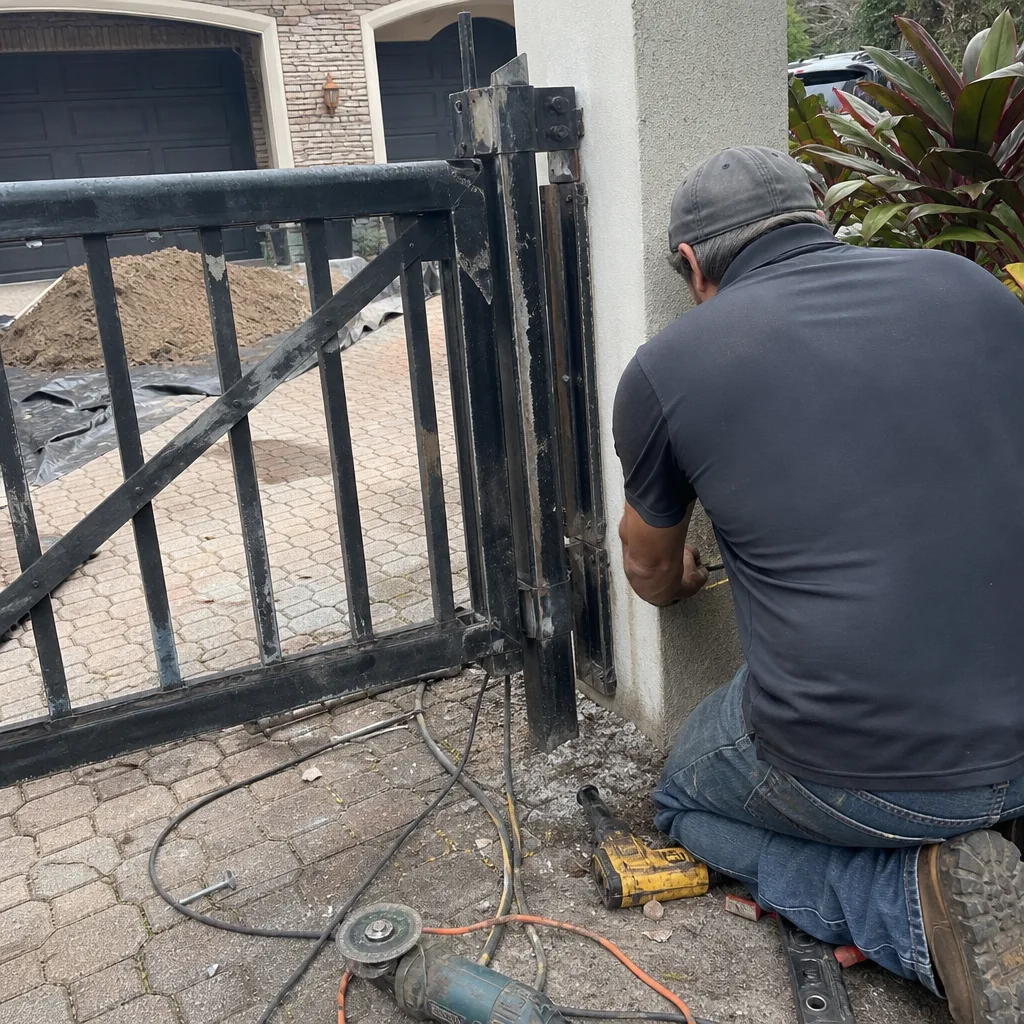 Before
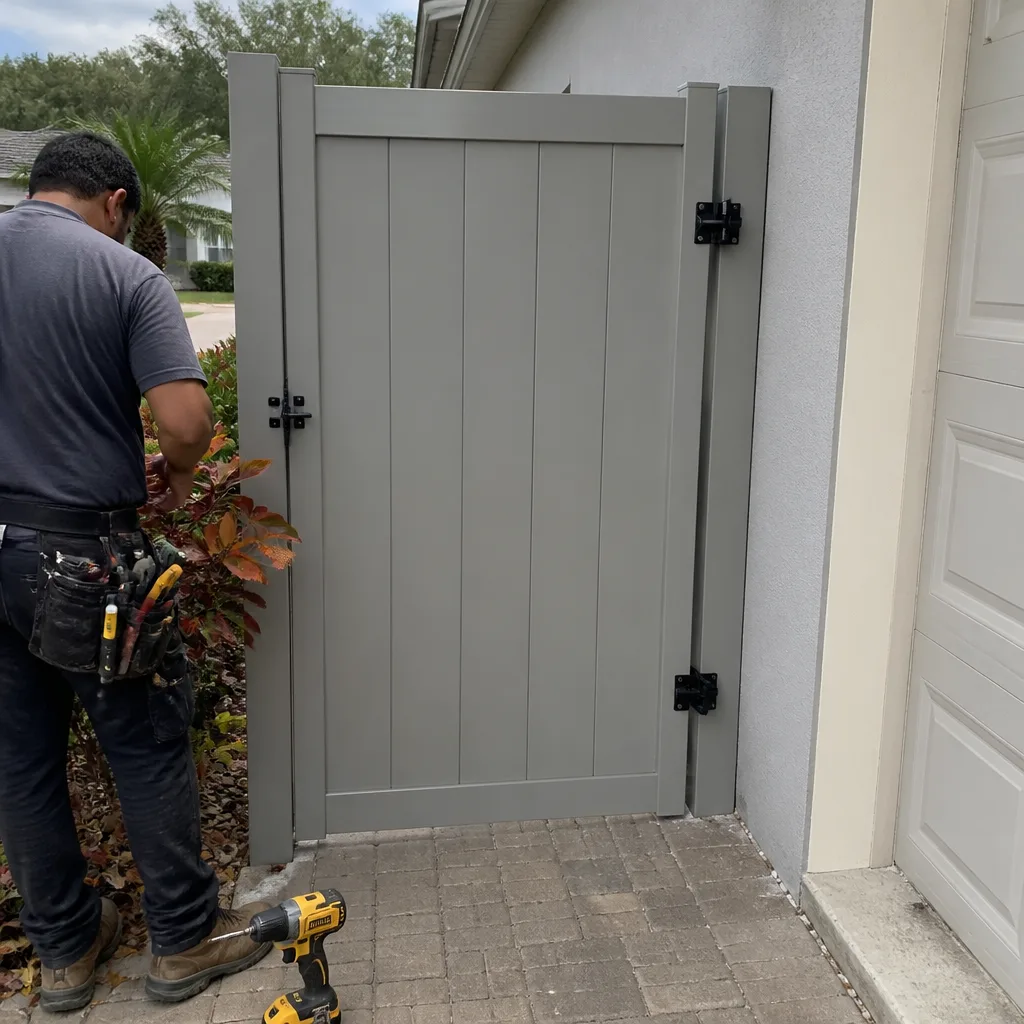 After
After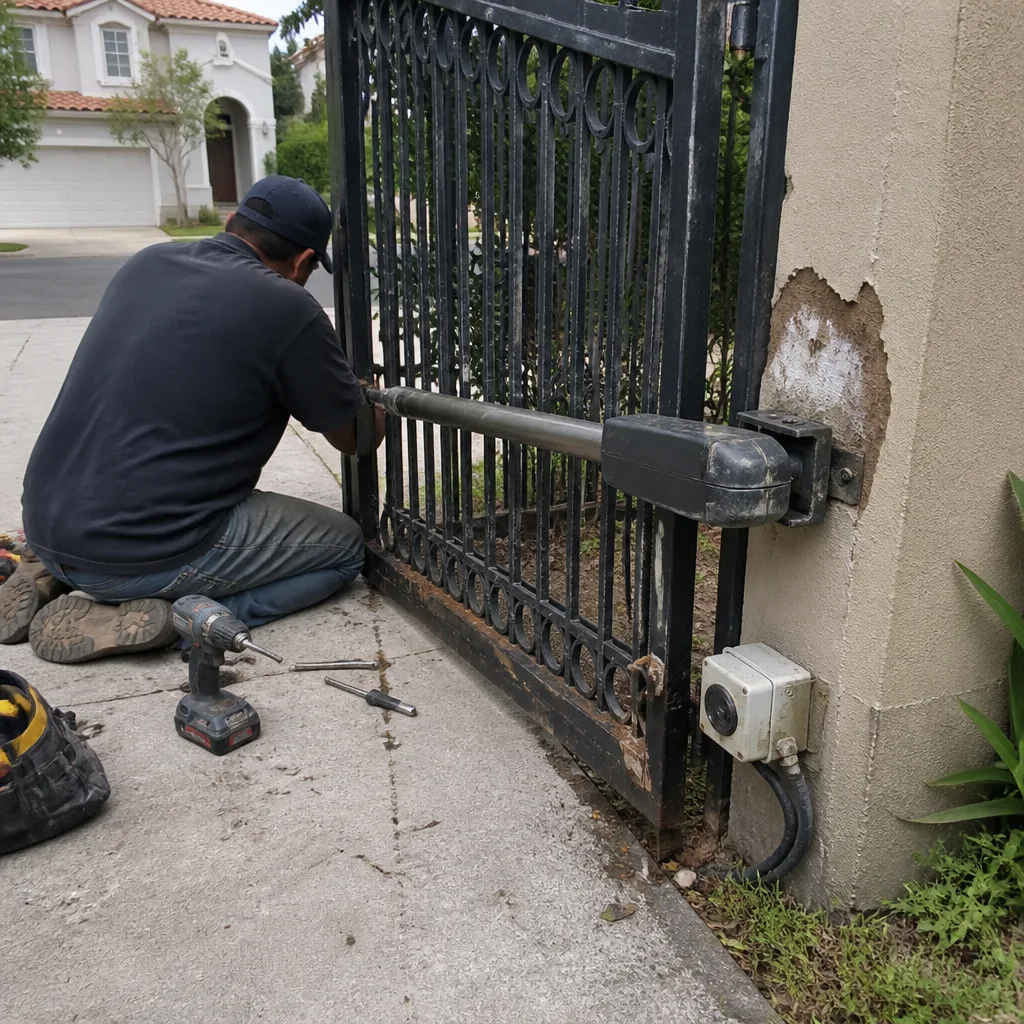 Before
 After
After Before
 After
AfterWhen to Call a Professional
Some gate problems are electrical and don’t care how handy you are. If your gate is on a BFT, Viking, or Linear operator and it’s flashing error codes, behaving erratically, or the manual release doesn’t solve the problem, you’re into the territory where guesses get expensive. Call a professional when the gate reveals a safety symptom, when the rust migration test finds structural damage, when multiple remotes and the keypad all fail at once, or when you’ve already replaced a part and the problem returned. Portcullis Gate Repair services offers free estimates throughout the Orlando metro area. Call (850) 816-3017, and you’ll talk to a live person, not a voicemail tree.
Frequently Asked Questions
The most common warning sign we see on Orlando gates is a grinding or squealing sound during operation, and it almost always traces to dry hinge bearings or a misaligned gate putting strain on the operator. The sound means metal-on-metal friction is already happening, and catching it early usually means a simple lubrication and adjustment rather than a component replacement. Call (850) 816-3017 and describe the sound over the phone; we can often tell you what you’re dealing with before we even come out.
A gate that won’t open at all usually costs between $90 and $380 to repair in Orlando, assuming the problem is a failed capacitor, a tripped breaker, a receiver board issue, or a chain that’s come off its sprocket. If the operator itself has failed and needs replacement, expect $850 to $1,900 for a residential unit. The only way to know which category you’re in is a proper diagnostic, and our estimate is free before any work begins.
We do our best to schedule emergency and urgent gate repairs the same day or the next day, especially when a gate is stuck open or closed, because we know a gate is a security and access problem for the entire property. Live-answer dispatch runs around the clock, so call (850) 816-3017 and we’ll give you a real arrival window, not a four-hour waiting game.
A gate that reverses on its own is responding to a signal from its safety system, which means it has detected or false-detected an obstruction in its path. The cause is usually a misaligned safety edge, a blocked photo eye, or a loop detector picking up a false reading. This is a safety system doing its job, and if it’s triggering constantly, the gate needs attention before the problem escalates.
Yes, and the difference is the humidity and daily thunderstorms. Orlando gates should be checked semi-annually at minimum for rust migration, alignment drift, and lubricant breakdown, because the wet-dry cycle speeds up all three forms of wear. Our Seasonal Gate Repair Care for Orlando: Year-Round Homeowner’s Guide has a full maintenance calendar. The same gate that’s fine with annual checks in a drier climate wants twice-yearly attention here.
The 365-Day Done Right Promise covers any repair we perform, in writing, for a full year from the date on the invoice. If the repair fails inside that period, we come back and correct it at no charge. That’s not a vibe, it’s a written guarantee stamped on every repair invoice, and it’s the Kingswell standard at every independent location.
The Bottom Line
Your gate tells you what’s wrong months before it stops working. The grinding hinge, the hesitating motor, the reversing operator, the rust bubble under the paint are all signals with specific meanings, and they’re all cheaper to address early than late. Orlando’s climate makes those signals come faster than they do elsewhere, which makes a semi-annual visual check the highest-value maintenance habit a gate owner can have. If you’re seeing or hearing any of the warning signs in this guide, or if your gate simply isn’t behaving the way it did when it was new, get a professional assessment. Portcullis Gate Repair has been serving Orlando since 2008 with Portcullis Gate Repair Orlando home service standards built on written prices, written guarantees, and a live person who answers the phone. Call (850) 816-3017 for a free estimate.
Written by Dean Prescott, Owner at Portcullis Gate Repair Orlando, serving Orlando since 2008. For more guides & resources, visit our blog.