
Last updated October 16, 2026
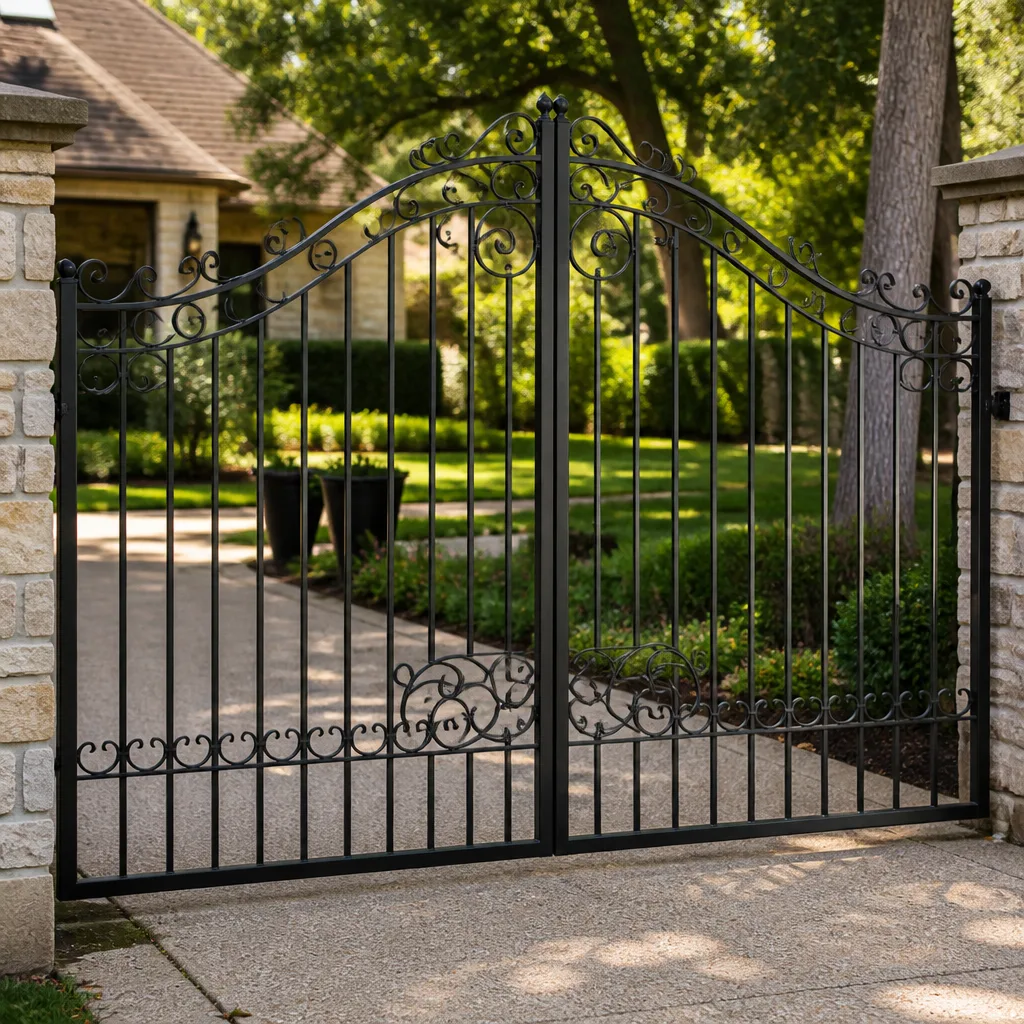 Wrought iron
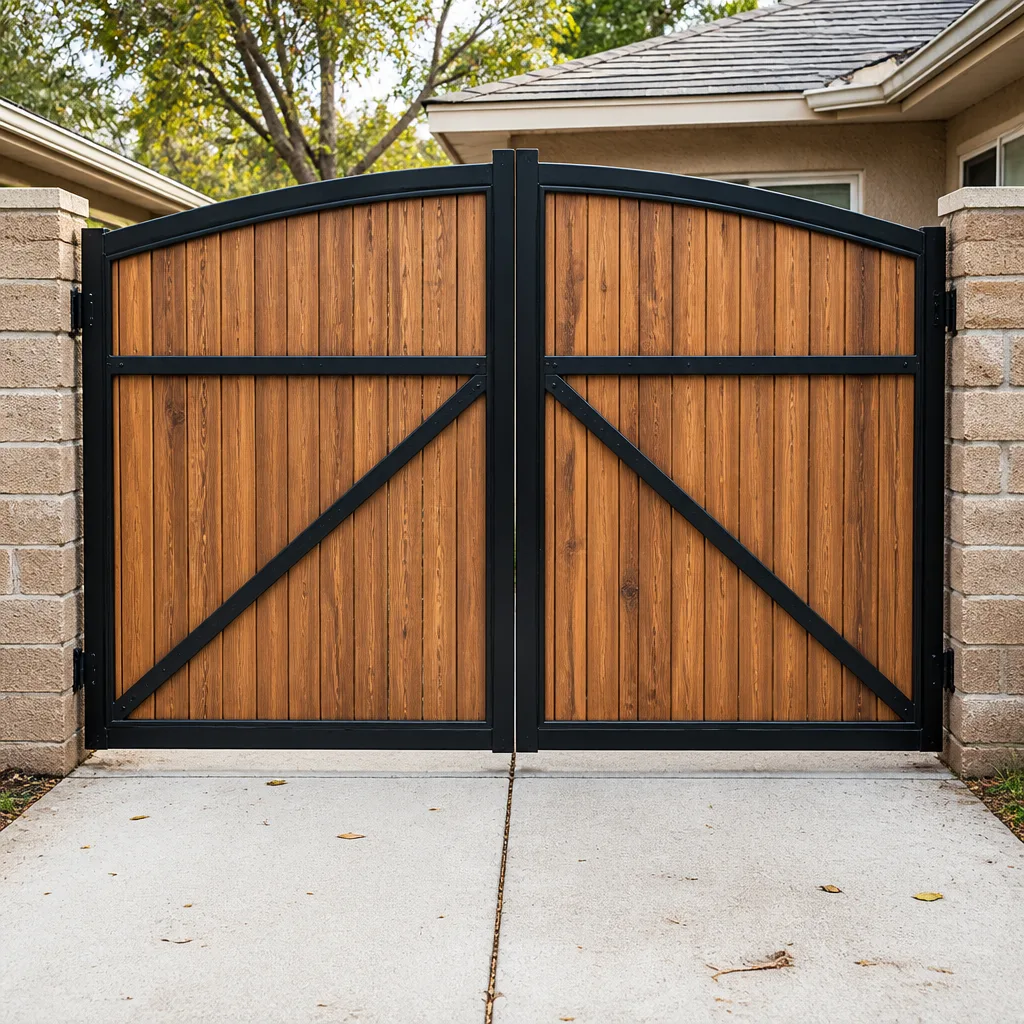 Wood & steel frame
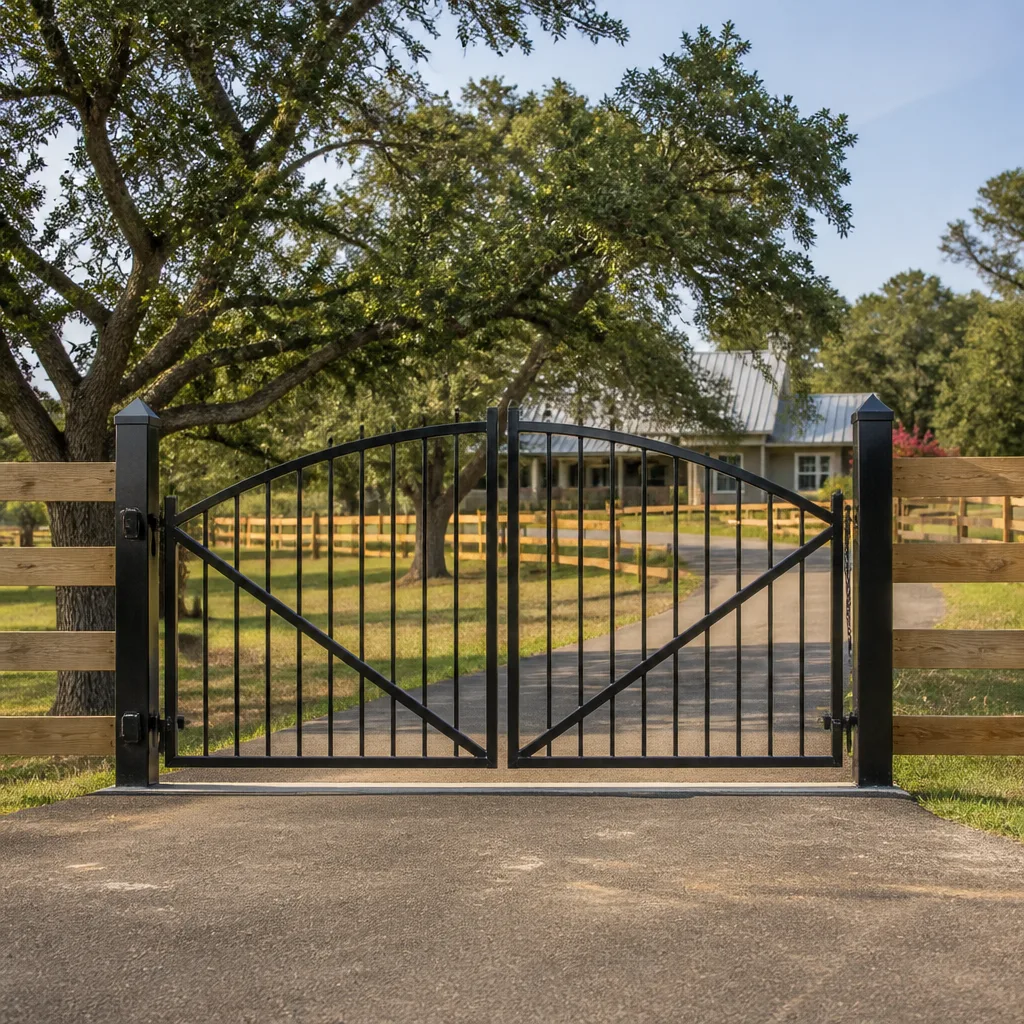 Farm & ranch
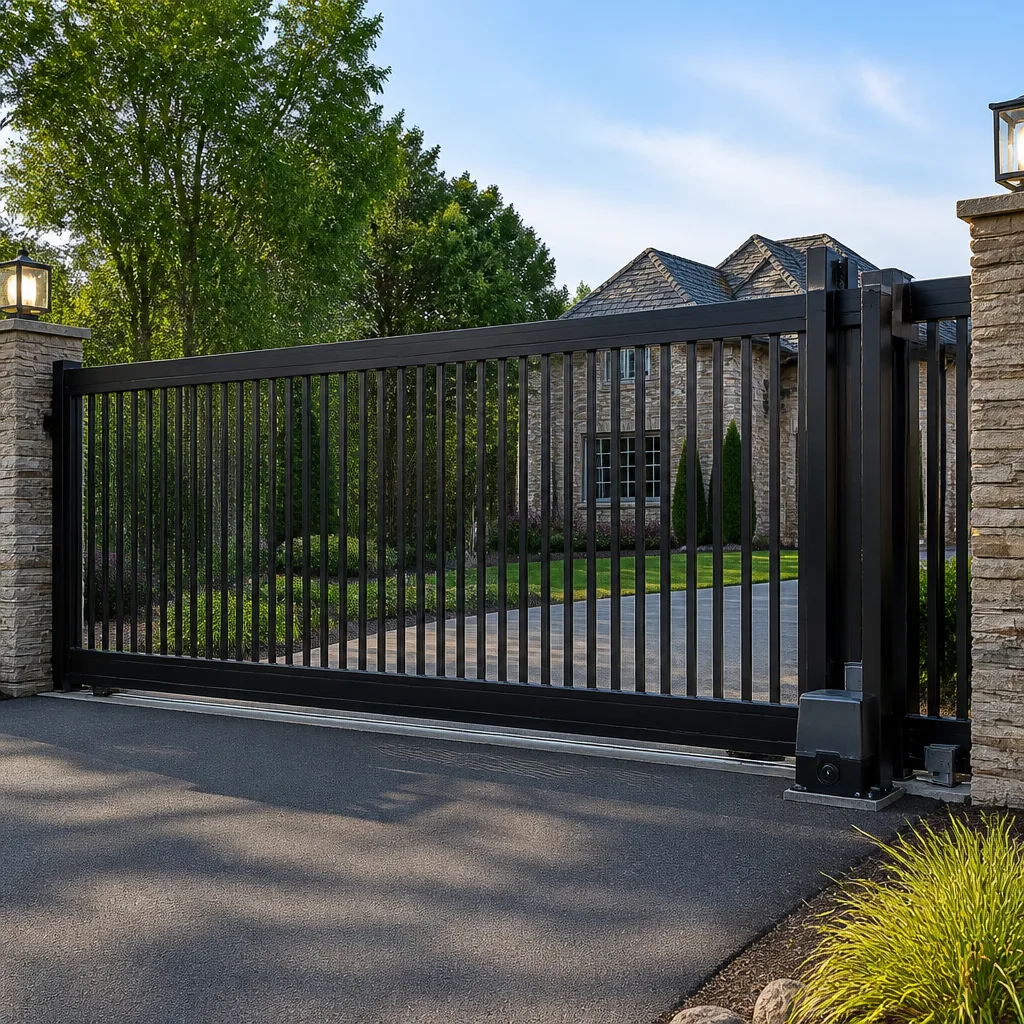 Sliding driveway gates
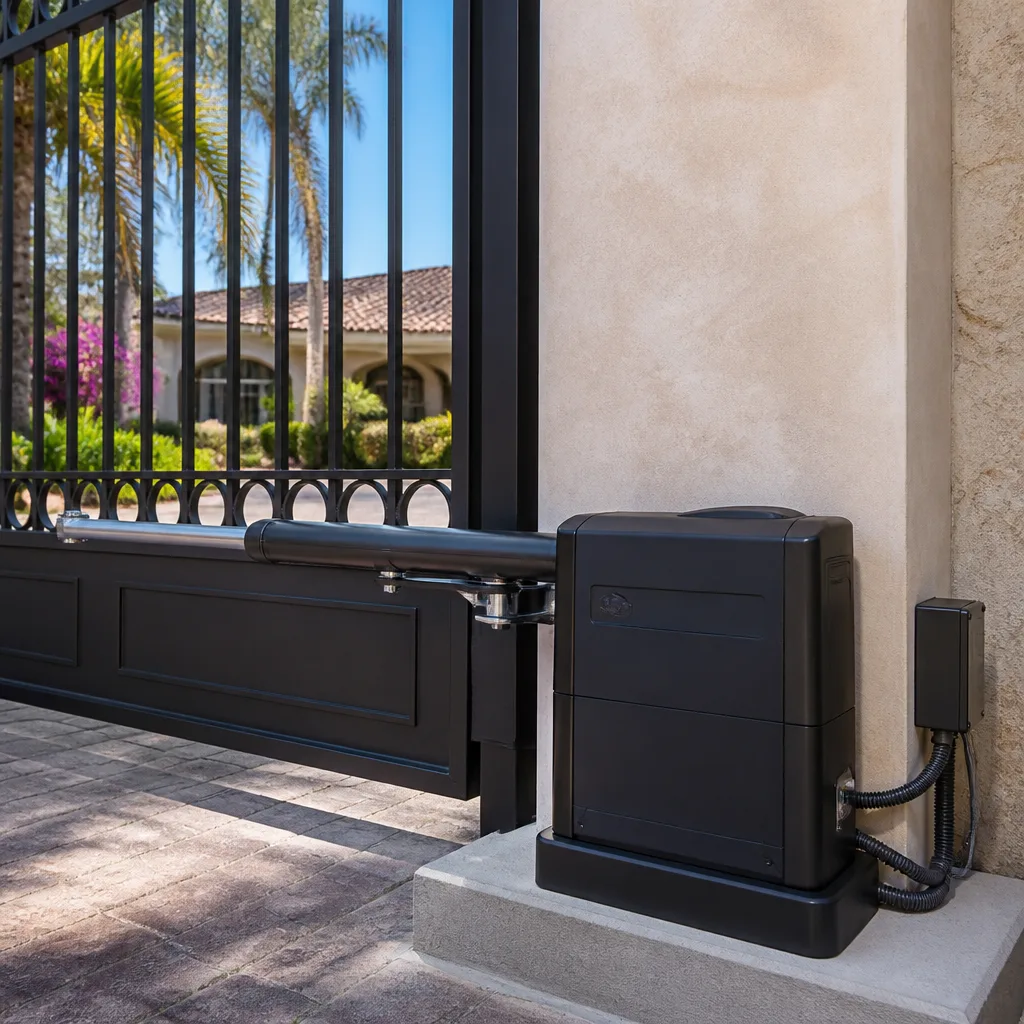 LiftMaster operators
Free on-site gate assessment - hinges, posts, and your LiftMaster or Nice gate operator checked before anything is quoted
The assessment is free and the quote is the invoice.
Get your free estimateGate Repair Permits, Codes & Inspections in FL: What You Need to Know
Every year in Florida, a homeowner hires a gate contractor, pays the invoice, and thinks the job is done. Then someone gets hurt. The insurance claim lands, and the first question the adjuster asks is whether the operator that swung that gate was installed under a permit and inspected for code compliance. If the answer is no, the claim can be denied. Most residential Gate Repair services in Orlando never trigger a permit requirement. But the exceptions are specific, and a contractor who tells you “we don’t need to pull anything for this” may be right, or may be quietly handing you a liability you never agreed to carry. This guide maps exactly where that line sits in Florida, so you can ask the right question before the first bolt comes out.
Styles & brands we work with
Quick Answer
Most residential gate repairs in Florida, such as replacing a broken hinge, a worn wheel, or a failed circuit board, do not require a building permit. A permit is generally required when you replace a structural gate post, install a new automatic gate operator where none existed, or run new electrical or access-control wiring. If you live inside Orlando city limits, the City of Orlando has jurisdiction; if you’re outside city limits in Orange County, the county’s permitting office applies, and the thresholds differ slightly. When in doubt, the question to ask your contractor is not “do you think we need one?” but “will you show me the permit number before you start?”
Contents
- What the Florida Building Code Actually Says About Gates
- Repair vs. Installation: Where the Permit Line Sits
- Orlando vs. Orange County: Which Rules Apply to Your Address
- UL 325 Compliance: The Safety Standard Most Contractors Never Mention
- HOA Architectural Review vs. Municipal Permit: Two Different Gates
- How to Verify a Permit Was Pulled and Inspected (Orlando Homeowner’s 3-Minute Check)
- What a Gate Permit Costs in the Orlando Area
- Common Mistakes to Avoid
- When to Call a Professional
- Frequently Asked Questions
- The Bottom Line
What the Florida Building Code Actually Says About Gates
Florida runs on a single statewide code: the Florida Building Code, currently in its 8th Edition as of 2023, with updates adopted every three years. That’s good news for homeowners because it means the core rules don’t change when you cross a county line. The code is built around the International Residential Code as a base, with Florida-specific amendments for wind load, corrosion, and the realities of salt air and hurricane season. For gates, three sections matter most: Chapter 1 (Administration), which defines what counts as work requiring a permit; Chapter 16 (Structural Design), which covers posts and footings; and the electrical provisions that govern operator wiring.
The permit triggers most relevant to gate work in Florida are straightforward once you see them.
- Structural post replacement: if a gate post is set in concrete and a contractor removes it to set a new one, that’s structural work. Florida Building Code treats the post as a structural element subject to wind-load requirements. A loose post that needs re-setting in the same footing may not trigger a permit; a new post in a new hole generally does.
- New operator installation: converting a manual gate to an automatic one, or installing an operator on a gate that never had one, is electrical work. That’s a permit. Replacing an existing operator with a comparable unit on the same wiring is repair, which in most Florida jurisdictions does not require a permit.
- New or extended electrical wiring: running a new power line from the house to the gate, adding a new junction box, or installing new low-voltage control wiring for intercoms and keypads is regulated electrical work. In Florida, a licensed electrical contractor must typically pull that permit, even when the gate technician handles the mechanical side.
- Access-control additions: adding card readers, vehicle loop detectors, or telephone-entry systems to a gate that previously had none means new low-voltage wiring. That triggers the electrical provision of the code.
The pattern is consistent: repairs replace what’s there; installations add something new. The Florida Building Code cares far more about the second category because new work creates new failure points, new loads, and new ways for a gate to hurt someone. In Orlando, the same logic flows through both the city and county permitting frameworks, which we’ll get to below.
Repair vs. Installation: Where the Permit Line Sits
The single most useful distinction for a homeowner is the line between repair and installation, because that line decides whether a permit is required at all. The Florida Building Code draws that line in Chapter 1, and it’s more generous than most people expect. A permit is not required for work that is defined as repair: the restoration of a system to its original condition using like materials and without changing the design, the load, or the safety characteristics of the system. That covers a lot of what gate companies in Orlando do every day.
Here’s how that distinction plays out in practice on a typical Orlando property.
| Work Performed | Repair (No Permit) | Installation (Permit Required) |
|---|---|---|
| Gate operator | Replace a failed FAAC, BFT, Linear, or Viking circuit board with a compatible board on the same mount and wiring | Install a brand-new operator on a gate that has never had one |
| Gate hinge | Remove a bent hinge and bolt on a new hinge of the same size and rating | Weld a new hinge mount or change the gate’s swing geometry |
| Gate post | Re-set a leaning post into the existing concrete footing after re-leveling | Break out the old footing, pour a new one, and set a new post |
| Wiring | Replace a damaged section of existing wiring with the same gauge and rating | Run a new circuit from the breaker panel to the gate |
| Safety edges / photo eyes | Replace a failed safety edge or photo eye on an existing automated gate | Add automated operation to a gate that previously had none, including first-time safety devices |
Two notes. First, “like materials” matters. Swapping a steel hinge for a plastic one on a heavy gate changes the load characteristics, and a building inspector would not consider that a repair. Second, even when a repair doesn’t need a permit, it still has to comply with the code in effect at the time of the work. An old gate that predates current wind-load requirements doesn’t have to be brought up to code because you replaced a wheel, but the new wheel still has to be rated for the gate’s weight. In our experience across Orlando’s older neighborhoods like College Park and Delaney Park, that distinction catches a lot of homeowners off guard.
Orlando vs. Orange County: Which Rules Apply to Your Address
Your address, not your mailing label, decides which jurisdiction governs your gate project. A surprising number of Orlando-area homes sit outside city limits and fall under Orange County, while others sit inside unincorporated pockets with Windermere or Winter Park addresses. The rule is simple: if your property is inside the incorporated City of Orlando, you go through the City of Orlando Permitting Services Division. If you’re outside city limits but still in Orange County, you go through Orange County Division of Building Safety. The thresholds for gate work are largely the same, but the process, the fee schedule, and the inspection timing differ.
Here’s the practical difference. The City of Orlando runs its permits through an online portal where contractors can file, pay, and schedule inspections electronically. Inspection windows are typically scheduled in two-hour blocks, and a failed inspection means a re-inspection fee. Orange County uses a similar system but with a larger territory to cover, and inspection times can stretch further depending on the inspector’s route. Neither system is onerous for a contractor who does this work regularly in Orlando; both are painful for a contractor who rarely pulls gate permits and finds the forms unfamiliar.
To confirm which jurisdiction applies to your address, here’s the step-by-step that takes about five minutes.
- Go to the Orange County Property Appraiser’s website and search your address.
- Look at the “Municipality” field on your property record page. If it says “Orlando,” you’re in city jurisdiction. If it says “Unincorporated,” you’re under county rules.
- If you live in another incorporated municipality such as Winter Park, Maitland, or Apopka, that city’s building department handles your permits, not Orlando’s or Orange County’s.
- Call the relevant permitting office and ask: “Does replacing a gate operator on an existing automated gate require a permit at this address?” Write down the name of the person you speak with.
That fourth step is the one we recommend to every homeowner before a gate installation quote is accepted. It takes one phone call and it settles the question with the authority that actually inspects the work. At Gate Installation in Orlando, we walk through this with our customers before writing any proposals, because the answer affects scope, schedule, and honest pricing.
UL 325 Compliance: The Safety Standard Most Contractors Never Mention
UL 325 is the safety standard that governs automatic gate operators in the United States, and it exists because automated gates have killed people. Specifically, the standard sets requirements for the force an operator may apply, the speed at which a gate may travel, the presence of safety devices that detect a person or vehicle in the gate’s path, and the warnings and labels that must appear on the operator and the gate itself. In Florida, UL 325 compliance is not optional. The Florida Building Code incorporates UL 325 by reference for automatic vehicular gates, which means a gate installation that doesn’t meet UL 325 is a code violation, regardless of whether a permit was pulled.
The practical implications for an Orlando homeowner are concrete.
- Entrapment protection is mandatory: every automated gate must have at least two independent means of entrapment protection, typically photo eyes across the gate opening plus a reversing mechanism built into the operator itself.
- Force settings must be dialed in: the operator’s force limiter has to be set so the gate stops and reverses if it encounters resistance. A gate that powers through an obstruction is non-compliant and dangerous.
- Warning signage is required: specific UL 325 warning signs must be posted on both sides of the gate in visible locations. Most gates we see in Orlando’s newer subdivisions are missing at least one sign.
- Operators carry a rating: Class I, II, III, and IV ratings correspond to intended use: residential, general access, limited access, and restricted access. Installing a Class I operator on a commercial property, or a Class II operator on a residential driveway without appropriate safeguards, is a compliance failure.
Here’s the liability angle that matters most. If a gate with a non-compliant operator injures someone, the homeowner’s exposure is not limited to a fine from the code office. Personal-injury attorneys and insurance adjusters understand UL 325, and they will ask whether the operator was installed with the required safety devices and whether the force settings were tested after installation. A gate company that skips the safety edges or sets the force limiter “high enough that it won’t false-trip” is not doing you a favor. That’s the precise scenario in which a claim gets denied. When we perform Electric Gate Repair in Orlando, our technicians verify safety devices and force settings on every visit, regardless of why they were called, because the liability doesn’t care about the invoice line item.
HOA Architectural Review vs. Municipal Permit: Two Different Gates
Homeowners regularly confuse two separate approvals, and that confusion can stop a gate project mid-excavation. An HOA architectural review and a municipal building permit are different processes, run by different bodies, enforcing different rules. You can have one without the other, and in some Orlando communities you need both before a single post hole gets dug. The HOA cares about appearance, setback, and neighborhood continuity. The municipality cares about safety, structure, and electrical code. Neither one knows or cares what the other is doing.
Here’s how they interact in practice.
- The HOA can stop your job for aesthetic reasons: if your community’s covenants require a specific gate style, material, or color, the architectural review committee can deny your request even if the city would happily issue a permit the same day. In master-planned communities around Orlando like Baldwin Park, Lake Nona, and Winter Garden’s newer subdivisions, that gate design standard is often strict: certain wrought-iron profiles only, certain heights only, no chain-link, and no operators that deviate from the approved spec.
- The city can stop your job for safety reasons: a municipal inspector doesn’t care if your gate is black or bronze. They care that the post footing is deep enough, the operator is UL 325 compliant, and the electrical work is up to code. A city permit doesn’t satisfy your HOA, and HOA approval doesn’t satisfy the city.
- You usually need the HOA first: most Orlando HOAs require architectural approval before the work begins, while the city issues the permit before the work begins. The practical sequence: submit to the HOA, receive written approval, then have your contractor pull the municipal permit, then schedule the work.
- Both can levy penalties independently: an HOA can impose fines or require removal of non-conforming work, and the municipality can issue a stop-work order, a correction notice, or require demolition of uninspected work. They don’t coordinate these penalties; they stack.
The question to ask before you hire anyone: “Does my HOA have a gate standard, and have you seen it?” A contractor who works regularly in Orlando’s HOA-governed communities will have encountered the document before. A contractor who shrugs and says “it’ll be fine” is the one who gets you a registered letter from the HOA attorney two weeks after the installation. At Portcullis Gate Repair Orlando home, we ask about the HOA on the first call, because we’ve watched too many beautiful gates get torn out over an architectural form that was never filed.
How to Verify a Permit Was Pulled and Inspected (Orlando Homeowner’s 3-Minute Check)
After the work is done, you should be able to prove the gate was permitted and inspected. Not because you don’t trust your contractor, but because the proof is the entire value of the permit. An inspection record is what turns a contractor’s word into a piece of paper your insurance company and a future buyer will accept. In Orlando, that proof takes three minutes to find.
- Go to the permitting portal for your jurisdiction. City of Orlando uses “Orlando Permits” accessible through the city’s website; Orange County uses “Fast Track Online Services.” Both allow public permit searches by address.
- Search your street address. Look for a permit issued around the date your gate work started. The permit type will be something like “Residential Alteration,” “Electrical,” or “Fence/Gate” depending on the scope.
- Check the status field. It should read “Finaled,” “Closed,” or “Inspections Passed” if the work was completed properly. If the status says “Issued” but not “Finaled,” the inspection hasn’t happened, which means the permit process is incomplete and the work is not yet considered code-compliant.
- If you found a permit, confirm the inspection date matches your records. A finaled permit with an inspection date from before your gate was installed is a red flag.
- If you found no permit, and your project fell into the permit-required category described above, call the permitting office and ask. Sometimes work gets permitted under the contractor’s name rather than the property address, but a diligent contractor will have tied it to your address.
This check is not about policing your contractor. It’s about owning your property’s paper trail. When you sell your Orlando home, the buyer’s inspector and lender may ask about the gate, and a finaled permit is the cleanest possible answer. When a hurricane damages the gate and you file a claim, the same record protects you. For Gate Repair in Orlando, this documentation is part of the job, not an upsell, and the written Kingswell Guarantee on every repair invoice is backed by that paper trail.
What a Gate Permit Costs in the Orlando Area
Permit fees are modest, and that’s part of why skipping them is so shortsighted. In the City of Orlando, a typical residential gate or fence permit runs between roughly $60 and $150 depending on the project valuation, and Orange County’s fee schedule lands in a similar range. Electrical permits for new operator wiring typically run $40 to $90. The fees are calculated from the stated cost of the work, so a bigger gate project with new posts, a new operator, and new wiring might push the combined permit cost toward $250. That’s the entire cost of the compliance layer on a job that typically runs several thousand dollars.
What that small fee buys is substantial: an independent inspector who verifies the footing depth, the UL 325 compliance of the operator, the safety devices, and the electrical connections. It also buys the record. When Dean Prescott, Owner at Portcullis Gate Repair Orlando, talks to customers about permits, the framing is simple: the permit is the cheapest insurance product you will ever buy for your gate. It costs less than a service call, and it prevents the scenario that prompted this guide: a gate that hurts someone, an insurance company that asks for the inspection record, and a homeowner who doesn’t have one.
Common Mistakes to Avoid
- Assuming a repair never needs a permit. Most don’t, but structural post replacement and first-time operator installation do. In Orlando, the line is between “like for like” and “new load,” and the distinction earns a phone call to the permitting office.
- Letting the contractor decide without a second opinion. A contractor who skips a required permit saves themselves a half-day of paperwork and inspection scheduling. You’re the one who carries the liability. Ask for the permit number, not the opinion.
- Confusing HOA approval with a municipal permit. HOA architectural review is about appearance. The building permit is about safety and code. Orlando’s HOA-governed communities require both on many gate installations, and neither substitutes for the other.
- Buying the cheapest operator online and having it installed without safety devices. A UL 325 non-compliant operator is a liability even if it works perfectly. The photo eyes, safety edges, and warning signs are not optional accessories.
- Not verifying the inspection actually happened. “Permit pulled” is not the same as “inspection passed.” Check the status field in the portal. If it doesn’t say “Finaled,” the job isn’t done.
- Reusing a post footing because it’s “probably fine.” In Orlando’s sandy soils, undersized footings are a standing problem. A post set shallow will lean within a season, and the gate will drag or bind. If the post is being replaced, the footing should be evaluated properly.
- Hiring an unlicensed electrical contractor for the wiring. Florida requires electrical work to be performed under a licensed electrical contractor’s permit. A gate technician who is not licensed for electrical work should not be running new circuits, and the permit won’t be issued in their name.
When to Call a Professional
Gate work sits at the intersection of structural, electrical, and safety code, and the homeowner’s role is to ask the right questions, not to perform the work. Specific scenarios that warrant a call to a professional include: any repair involving the gate’s automatic operator or its safety devices, because UL 325 compliance is not a YouTube project; any repair that involves the gate’s springs, hinges, or counterweight mechanisms under tension; and any job you’re considering that touches new wiring, new posts, or a new operator, because that’s the permit zone. A professional can answer the permit question for your specific address in one phone call. Portcullis Gate Repair Orlando offers free estimates in Orlando, call (850) 816-3017.
Frequently Asked Questions
Most residential gate repairs in Orlando do not require a permit, as the Florida Building Code treats “repair” as the restoration of an existing system using like materials without changing its design or safety characteristics. Replacing a broken hinge, a failed circuit board, or a worn wheel falls under repair. Replacing a structural post, installing a new operator, or running new electrical wiring requires a permit. If you’re unsure, call the City of Orlando or Orange County permitting office with your address and ask, because the answer depends on your specific jurisdiction and scope.
A typical residential gate permit in the Orlando area runs between $60 and $150 depending on the project valuation, with electrical permits for new operator wiring typically running $40 to $90. Larger projects involving new posts, a new operator, and new wiring can push combined permit fees toward $250. The fee is calculated from the stated cost of the work, and it buys an independent inspection that verifies code compliance, which is a small price for the evidentiary value it creates for insurance and resale purposes.
If work that required a permit was performed without one, the municipality can issue a stop-work order, require correction or demolition of the uninspected work, and levy penalties. More importantly, if the gate injures someone and the installation was never inspected, a homeowner’s insurance claim can be denied on the grounds that the work wasn’t permitted or code-compliant. That’s the exposure most Orlando homeowners don’t realize they’ve accepted until it’s too late.
No, hiring a licensed contractor does not guarantee a permit was pulled. The permit is a separate step, tied to your property address and the specific scope of work. A licensed contractor should include the permit in the scope of work when it’s required, but the homeowner should always confirm the permit number before work begins and verify the inspection status after it ends. It’s your gate, your property, and your liability.
Any of these four brands is a solid choice for residential use in Orlando, as all four produce UL 325 compliant operators with entrapment protection and force-limiting features. The more important question is whether the new operator is matched to the gate’s weight, swing, and duty cycle, and whether the technician sets the force limits correctly and verifies all safety devices after installation. A good operator installed incorrectly is not a good installation. Call (850) 816-3017 for an exact recommendation on your gate; estimates are free.
In Florida, new electrical wiring must be pulled under a licensed electrical contractor’s permit, which means the gate technician handling the mechanical installation and the electrician handling the power run may be different people or different companies. Some gate companies in Orlando hold the appropriate electrical license; others subcontract the electrical portion. The key is to ask who is pulling the electrical permit and to confirm it’s tied to your address before work begins. A reputable company answers that question in one sentence.
The Bottom Line
Most gate repairs in Orlando don’t need a permit, and that’s the entire reason the exceptions are dangerous: they’re easy to lump in with everything else. Structural post replacement, first-time operator installation, and new access-control wiring cross the line into permitted work, and the record that permit creates is the difference between a gate that causes a claim and a gate that survives one. UL 325 compliance-covered in detail in our Gate Repair Warning Signs: A Orlando Homeowner’s Reference Guide-is the hidden layer beneath every automated gate in Florida, non-negotiable whether anyone inspects it or not. Ask the contractor for the permit number if the scope warrants one. Verify the inspection online after the job. And remember that HOA approval and a municipal permit are two different gates, both of which can stop you mid-project if you ignore one.
Written by Dean Prescott, Owner at Portcullis Gate Repair Orlando, serving Orlando since 2008. Explore more guides & resources on gate safety and compliance.
See the difference
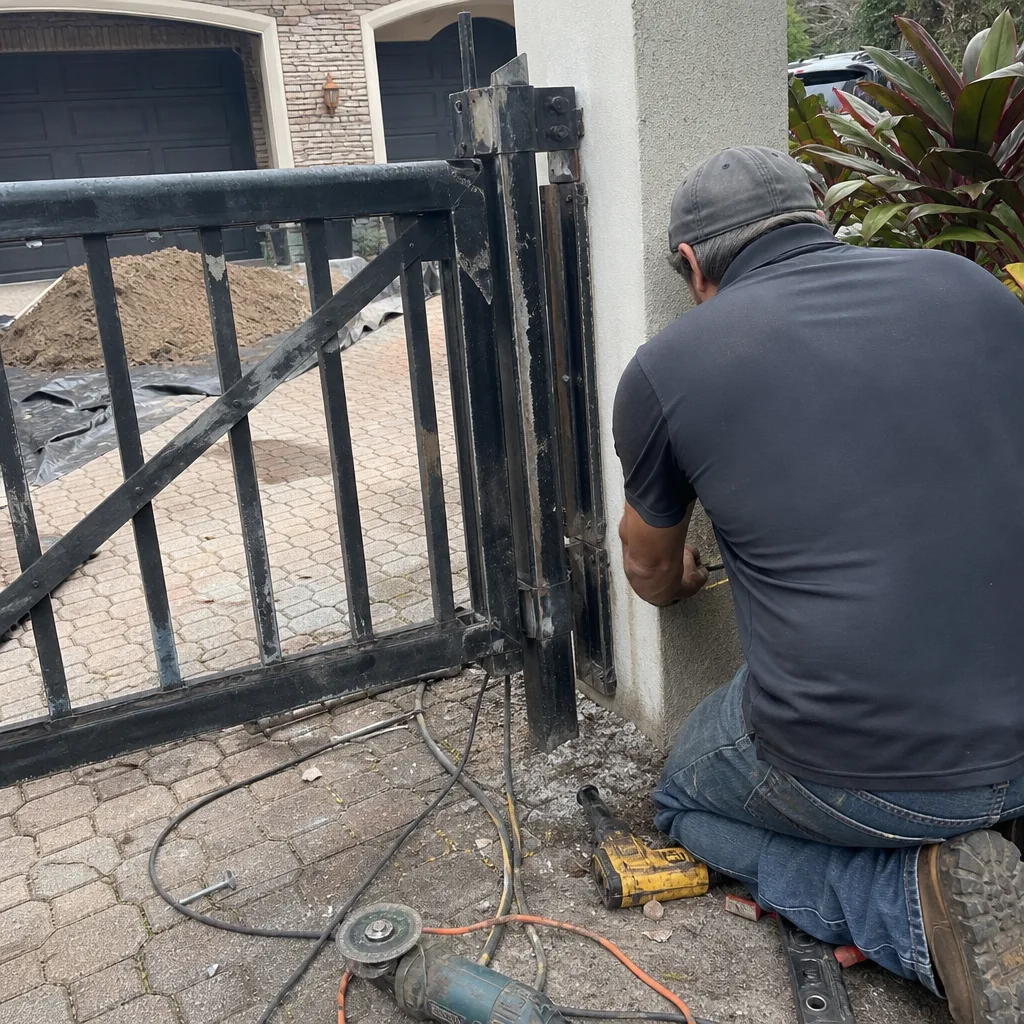 Before
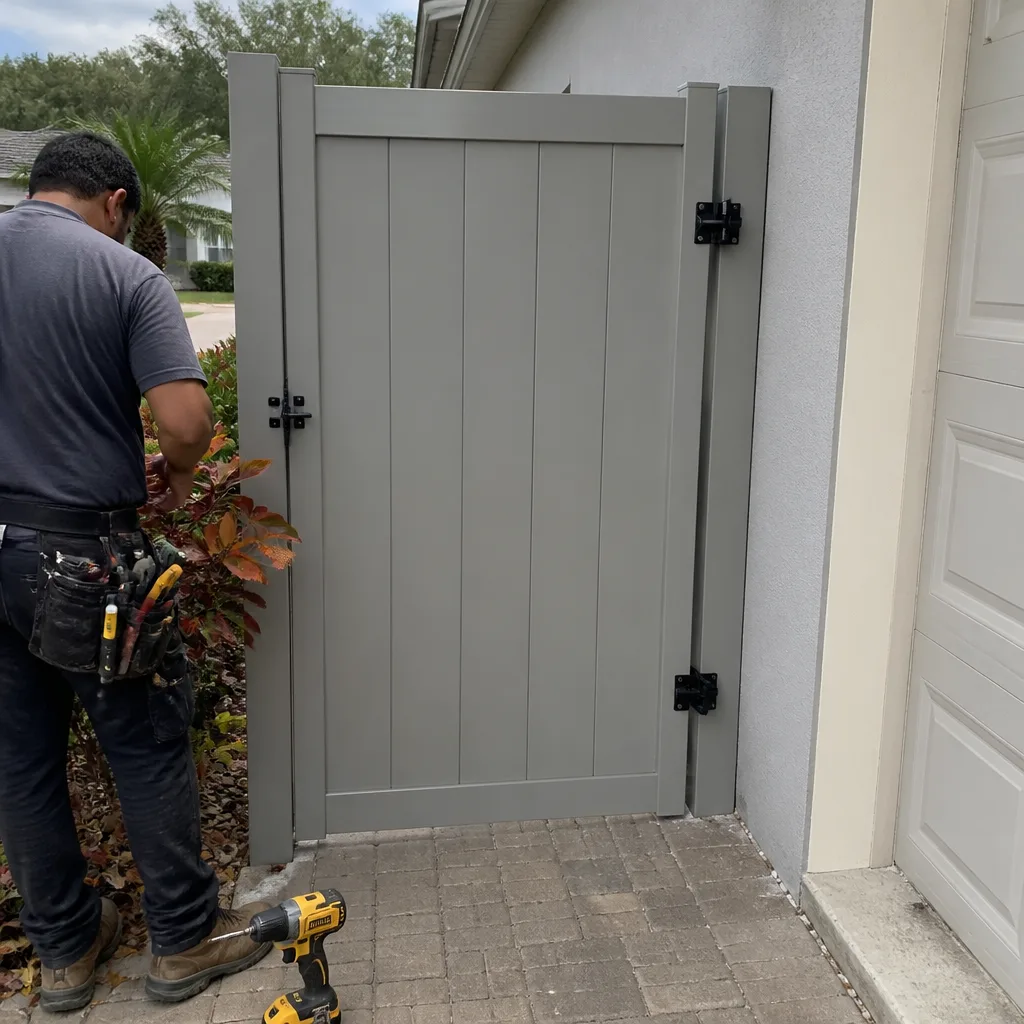 After
After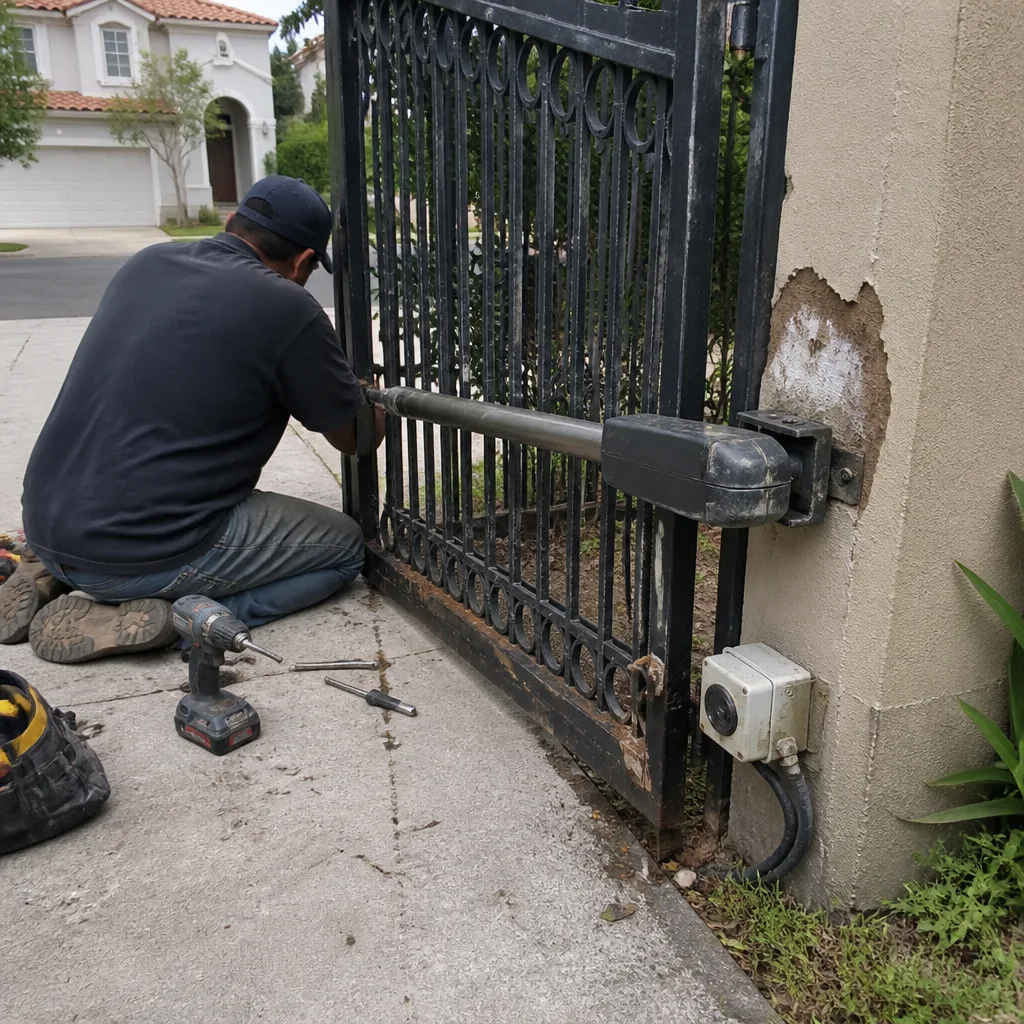 Before
 After
After Before
 After
After